
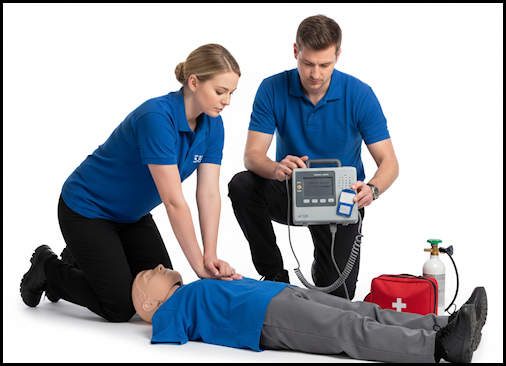
 Thanks to Alex for some high quality training on the CPR and the use of defibillators.
He commenced by explaining the difference between a heart attack (plumbing) and cardiac arrest (electrics!)
In the case of cardiac arrest the electrical signals to the heart are often in a state of fibrillation (irregular fluttering).
The patient will be unconscious and the first 3-5 minutes are pivotal. CPR keeps oxygen circulating until a defibrillator can be used to stop thje fibrillation and allow the heart to restart with a proper rhythm.
D - R - S - A - B - C- D
Danger
Assess the scene and make sure it is safe for both you and the person before you approach.
Responsiveness?
Check if the person is responsive by speaking to them and gently shaking their shoulders.
Send for help
If the person is unresponsive, call emergency services immediately or ask someone else to call. (Put phone in speaker mode.)
Knowing ‘What3Words’ for your property is useful in getting 1st responders to the right address.
Airways check
Open the person's airway. Place them on their back, open their mouth to check for obstructions, and tilt their head back gently.
Breathing check
Look, listen, and feel for breathing : 2 breaths in 10 seconds. If the person is not breathing normally, begin CPR.
CPR
Perform chest compressions. Continue until professional help arrives, the person starts to respond, or you are unable to continue. (Staying alive, staying alive …. Another one bites the dust - correct rhythm but inadvisable.)
Defibrillation
If an automated external defibrillator (AED) is available, use it as soon as possible. Turn it on and follow the voice prompts.
Shout stand clear (and do so!) before pressing the shock button.
Recovery
If the patient's heart restarts and they recommence breathing - place them in the recovery position but do not remove the (single use) electrodes until medical help arrives in case of a re-occurence of the need to use them
Where to find a defibrillator
It's useful to know beforehand where they are near your home. Use https://www.defibfinder.uk/
Post-defibrillator counselling.
Don't be surprised if after the event you are emotionally affected by the experience. Seek help here: https://www.bhf.org.uk/informationsupport/support/support-if-youve-given-cpr